For qdrant infrastructure and platform teams
Qdrant: Vulkan device, index build or input vectors?
Connect the first useful exception with the relevant runtime evidence. Was a GPU-enabled indexing image and device selected?
Free 30-day Team evaluation. No card or automatic subscription. Work email verification required.
Replay a resolved Qdrant workflow incident
Upload your log file. Review the selected evidence and masking, then run diagnosis. Keep the original log for any follow-up questions.
Before uploading, review cloud data handling and local options.
Upload your log file. Large files are processed in your browser. Only selected evidence is submitted when you run diagnosis.
Try Denpex for 30 days. FREE.
No credit card. No automatic subscription. See whether Denpex helps with an incident you already understand.
Start your free 30-day Team evaluation
Up to 50 diagnoses a day for 30 days. Verify your work email to activate an eligible company evaluation, then replay a resolved incident and compare the evidence and next steps with your team's confirmed cause.
What a useful evaluation should establish
Compare one incident your team already resolved with the first failure, cited evidence and remaining questions. Was a GPU-enabled indexing image and device selected? Only assign a rank, device or safe recovery state when the submitted evidence establishes it.
Was a GPU-enabled indexing image and device selected?
Evidence to compare: Qdrant image identity, indexing configuration and detected Vulkan device.
The default binary and GPU images have different dependencies. Confirm the indexing path before attributing a missing device to a broken CUDA installation.
Did host memory or device memory run out?
Evidence to compare: Container or scheduler host-memory limit, process kill evidence and first allocation exception.
Host memory and device memory are different resources. A host-memory kill needs different evidence from a GPU allocator failure; identify the failed operation before changing a limit.
Which accelerator backend produced this exception?
Evidence to compare: Actual device vendor, selected runtime backend and first initialization error.
CUDA, ROCm and other backends have different failure boundaries. Keep NVIDIA-specific hardware conclusions out of unsupported devices or unseen provider infrastructure.
Use Denpex alongside your existing telemetry tools to investigate submitted incident evidence. With monitoring configured on a supported plan, detected failures can trigger alerts and an automatic diagnosis from the captured evidence.
Inside Denpex
See the evidence, not just the claim
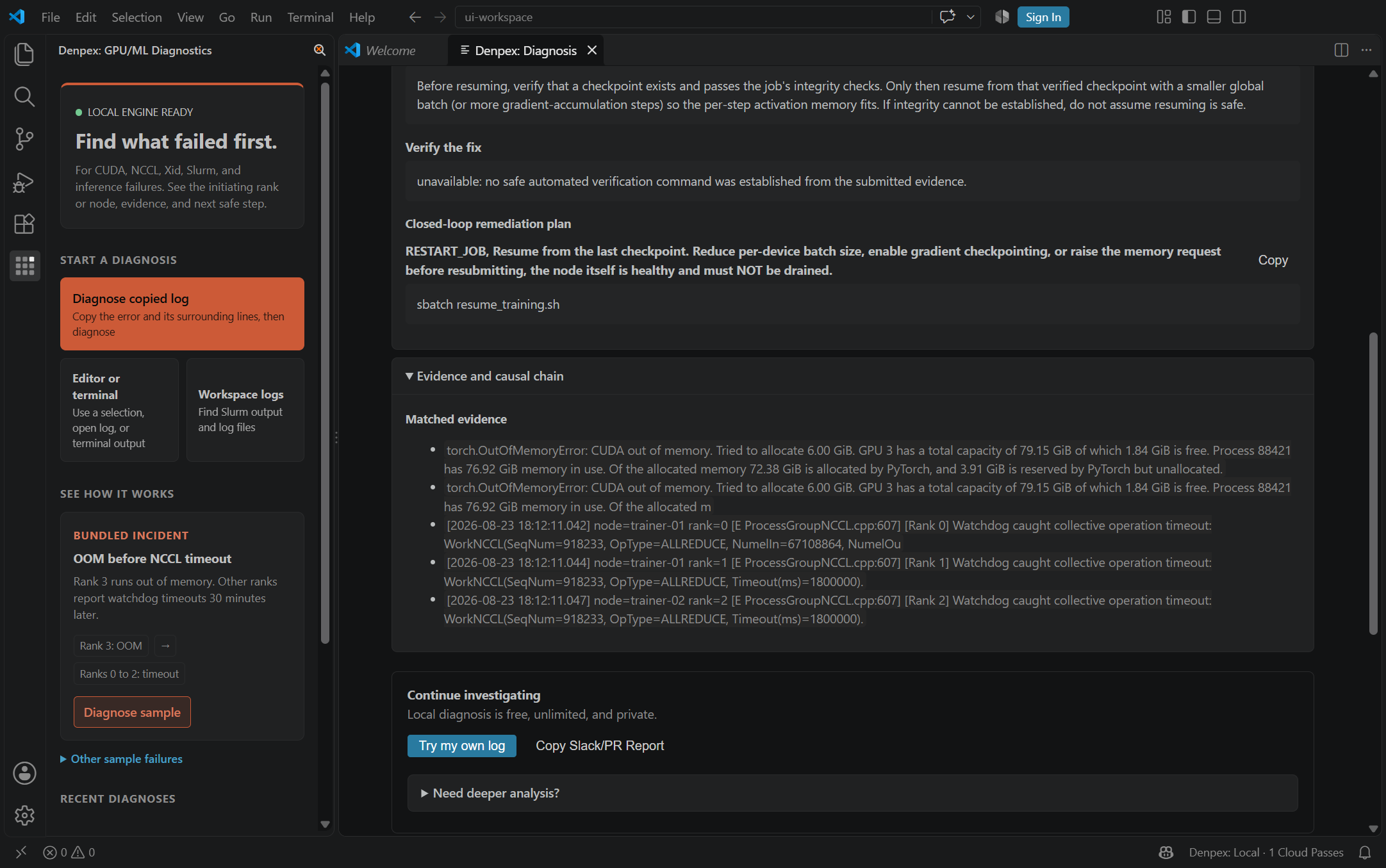
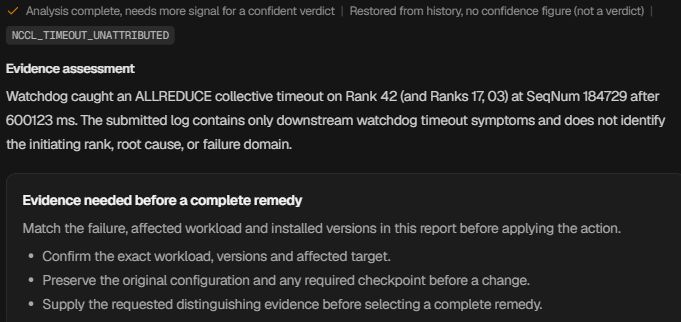
Follow the causal chain, inspect the quoted evidence and prepare the next handoff. These actual product captures use founder-account examples and the VS Code extension, with the source identified under each image. Open a capture to inspect it at full size.
Follow the failure through the cascade
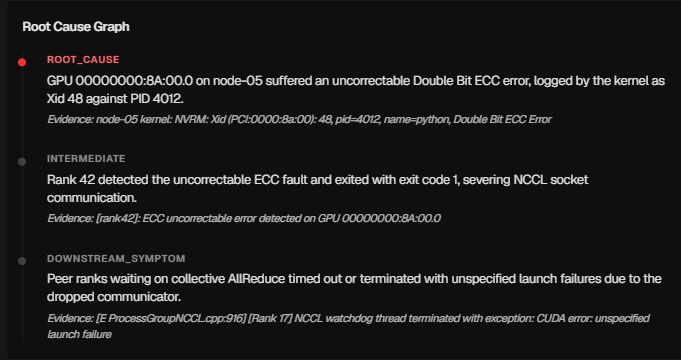
Prepare the hardware escalation

Ask for the evidence that is missing
Keep the investigation in the editor